Prescott became Arizona's first territorial capital in 1864, a brand-new mining town in the mountains chosen while older, larger Tucson fought hard for the honor. The town was pulling gold and silver out of the surrounding country, the territory needed a seat of government, and Prescott got the nod.
The capital eventually moved on, but Prescott never stopped acting like one. The courthouse square, the rebuilt commercial blocks, the mansions on the hill: the whole town still reads like the seat of government it briefly was. Here is how it happened, and where to see the evidence on foot.
How did a mining camp become a capital?
In the mid-1800s, Prescott was a small mining town with big ambitions, rough and tumble like the rest of the Arizona territory but sitting on gold and silver country in the mountains. When the new territory needed a capital, Prescott and Tucson fought over the appointment, and Prescott won it in 1864. The prize did not stay put; the seat shifted during the territorial years, and when statehood arrived, Phoenix prevailed for good.
Prescott's response to losing the capital was to keep building anyway. The town dug in, kept mining, and grew into the anchor of the mountain country, all of it on land that was and is the homeland of the Yavapai. What the government took south, the town replaced with commerce, culture, and one very famous street.
What is Courthouse Plaza?
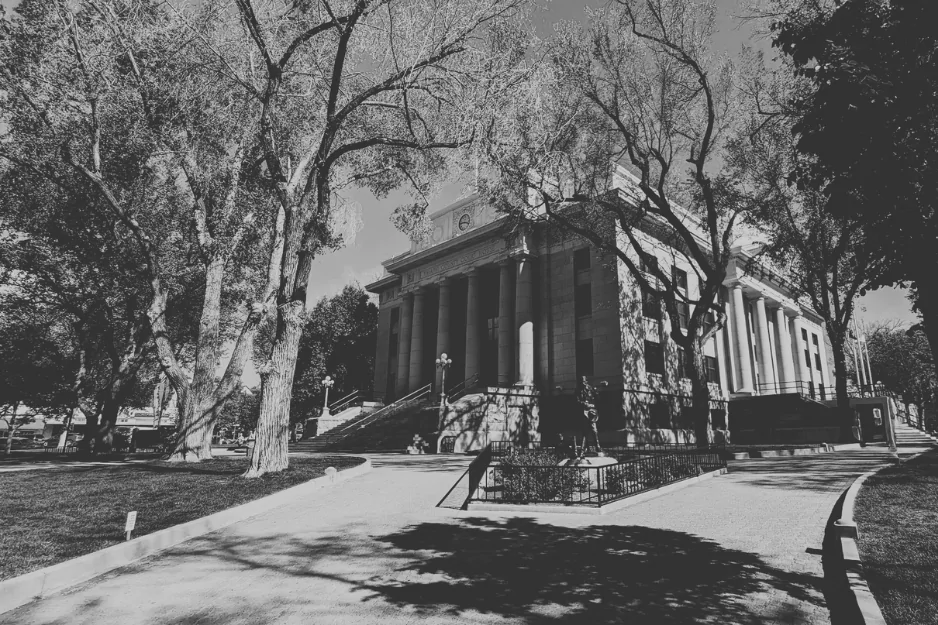
Courthouse Plaza is the green square at the center of everything, anchored by the 1916 Yavapai County Courthouse and ringed by 19th-century buildings and elms planted generations ago. The 1910 bandstand still stands on the lawn. Few towns in the West kept their original center this intact, and Prescott's whole story can be told within a block of it.
For the territorial government itself, walk to the Sharlot Hall Museum, where the original Governor's Mansion and a complex of historic buildings preserve the capital years directly. The archives there hold the stories that never made the textbooks.
What happened to Whiskey Row?
It burned, and the town rebuilt it better. On July 14, 1900, a fire that started at the O.K. Lodging House consumed the business district in a few hours, the original Whiskey Row included. The most famous scene of that night: patrons of The Palace carried the massive hand-carved bar across the street to the courthouse lawn and kept serving drinks while downtown burned behind them. The full account is in the Great Fire and the Plaza.
The rebuild went up in brick, by a town that had just learned what wood costs, and that brick is the Whiskey Row you walk today. The Palace still serves, with the rescued bar back inside where it belongs.
Who were the Goldwaters?
Prescott's merchant royalty. The Goldwater family built its name in Prescott commerce, with Morris Goldwater among the town's most prominent citizens, a driving force behind landmark buildings on Cortez Street. From that mercantile foundation the family rose all the way to the U.S. Senate, one of the clearest lines you can draw from a territorial storefront to national politics.
The fortunes made on the Row and in the shops went somewhere visible: Nob Hill, where Victorian mansions rose above downtown on whiskey and mercantile money. Add Andrew Carnegie's library, and you have a mining camp that spent its winnings on the trappings of a capital, even after the title left.
What do the Rough Riders have to do with Prescott?
The bronze Rough Rider Monument on Courthouse Plaza honors Buckey O'Neill and the Prescott volunteers who rode with Theodore Roosevelt in the Spanish-American War. It is the town's front-porch statue, the landmark locals use for meeting up, and a reminder that this small mountain town kept inserting itself into national stories. Hollywood came calling too; the Tom Mix chapter is one our guides like to save for the walk.
Questions people ask
When was Prescott the capital of Arizona?
Prescott became the first territorial capital in 1864. The seat moved during the territorial years amid the rivalry with Tucson, and Phoenix held it permanently once Arizona reached statehood.
Can you still see capital-era buildings?
Yes. The Sharlot Hall Museum preserves the original Governor's Mansion among a complex of historic buildings, and the blocks around Courthouse Plaza are remarkably intact, with most of the commercial district dating to the brick rebuild after 1900.
Is downtown Prescott walkable?
Very. The Plaza, Whiskey Row, Cortez Street's shops, and the museum all sit within a few blocks of each other. One note for flatlanders: the town sits at roughly a mile of elevation, so take the hills at a Prescott pace.
What is the best way to learn this history in person?
Walk it with someone who has read the receipts. The Prescott History Tour covers the capital story, the fire, the fortunes, and the characters, daily at 10 AM.
Walk the first capital
Reading about 1864 is one thing. Standing on the lawn where the bar landed, under the courthouse the county built when the town refused to fade, is better. The Prescott History Tour runs daily at 10 AM, lasts two hours, costs $35, and is dog friendly, meeting at Courthouse Plaza by the Rough Rider Statue, 120 S Cortez St. Bring the dog, bring your questions, and see what a capital looks like when it never stops being one at heart. For the rest of a full day here, see 24 hours in Arizona's original capitol.