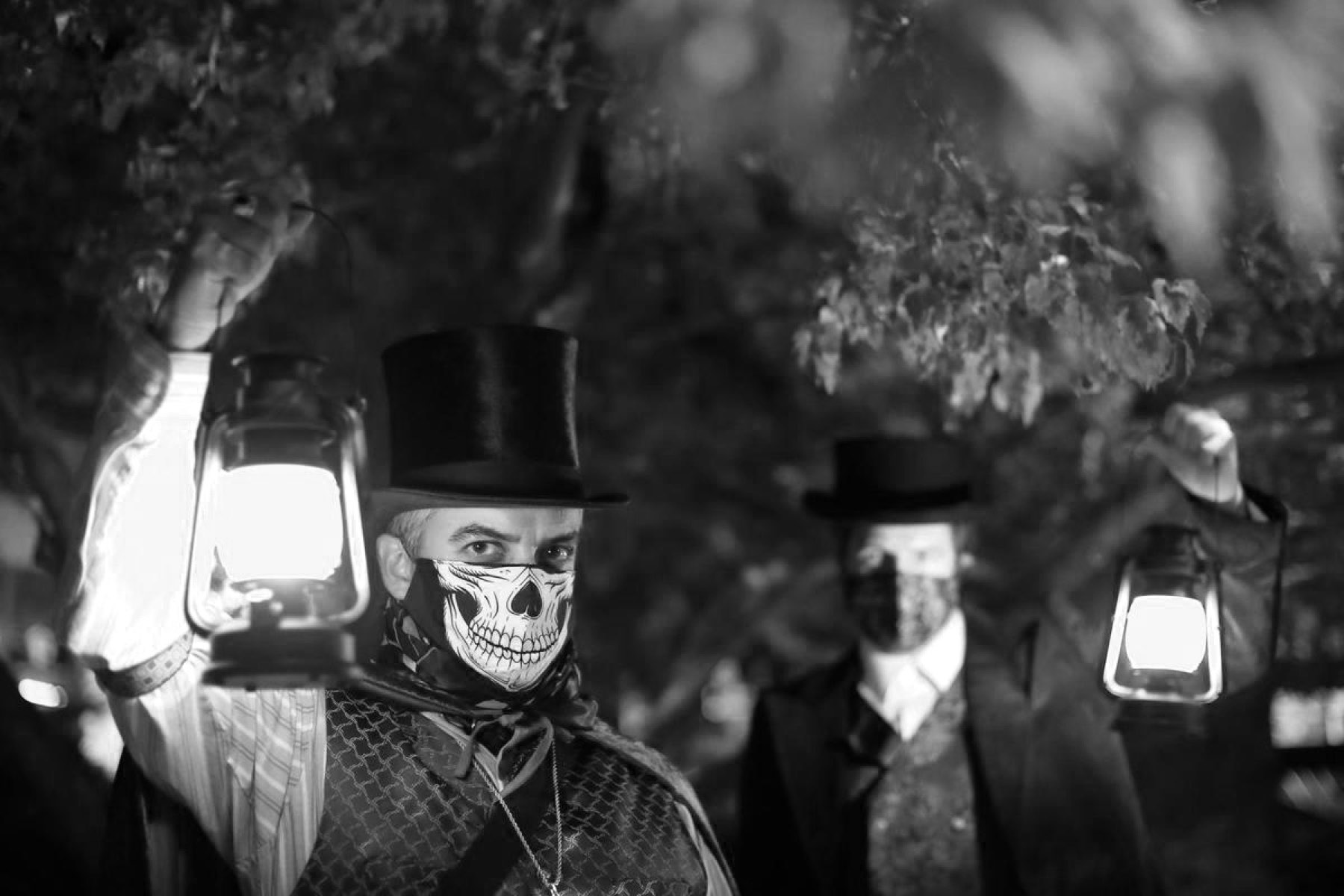
Prescott was built on grit and gold. Arizona’s first territorial capital, founded in 1864, put its courthouse on a green square and its saloons directly across the street, and the two institutions kept each other busy for decades. Public hangings on one side. Whiskey Row celebrations on the other. Walk the perimeter of the Courthouse Plaza today and the architecture tells a story of survival while the spirits, locals say, tell a story of unrest.
The Hassayampa Inn: the bride’s eternal vigil
At the corner of Gurley and Marina Streets sits the Hassayampa Inn, the red-brick grand hotel Prescott opened in 1927. From the public walkway you can look up at the balcony of Room 426, the old honeymoon suite. That balcony belongs to Faith Summers.
The legend says Faith checked in as a new bride, her husband stepped out for cigarettes and never returned, and after days of waiting she took her own life. Late-night walkers still report a figure on the balcony, a Pink Lady with her eyes fixed on the horizon, waiting for a man who is not coming back. The full account is in our story of the Hassayampa’s eternal guest.
The Palace: the bar that refused to burn
Whiskey Row is the most famous block in Prescott, and The Palace is its anchor. When the Great Fire of 1900 came for downtown, the patrons famously hauled the 24-foot carved cherry-wood bar across the street to the Plaza, set it down among the trees, and kept drinking while the town burned to ash behind them. The rebuilt Row rose around that bar, and the whole saga is worth reading in the Great Fire and the Plaza.
The boardwalk outside The Palace is where the darker stories get told. Jennie Clark, a woman of the Row, was stomped to death inside while no one intervened, and the governor pardoned her killer before the body was cold. Locals also tell of Frank Nevin, a gambler said to have lost his business, and then his life, over a high-stakes game. The Row’s energy is most potent in early spring, when the wind whistles through the gaps in the old brickwork.
Did hangings really happen on the Courthouse Plaza?
Yes. Between 1875 and 1925, legal hangings took place on the square where the Greco-Roman Yavapai County Courthouse now stands. The most notorious belonged to Fleming Parker, the outlaw who gunned down the district attorney while escaping the jail, a crime that guaranteed the gallows would be waiting when they caught him.
From the sidewalk you can stand where the old jail and gallows once did. Some say that on full-moon nights the shadow of a man in a noose still falls across the courthouse walls. We tell Parker’s final walk on the tour, and the ending has not softened with age.
Questions people ask
Can you see Room 426 from the street?
Yes. The balcony of Room 426 is visible from the public walkway at Gurley and Marina, which is exactly where the Pink Lady sightings come from. No ticket required, though the hotel will happily rent you the room itself.
Is the Plaza worth walking in daylight too?
Absolutely. Daylight shows you the rebuilt brickwork, the courthouse architecture, and the layout that put saloons and gallows a street apart. Night is when the stories do their best work. Many visitors do both in one day.
Walk this story
The Plaza’s dark past sits in plain sight once you know where to look, and the looking is better with a local. The Prescott Ghost Tour circles these same blocks nightly at 7 PM for $29, from Faith’s balcony to the gallows ground. If you prefer your outlaws by daylight, the Prescott history tour runs daily at 10 AM, two hours for $35, dogs welcome.