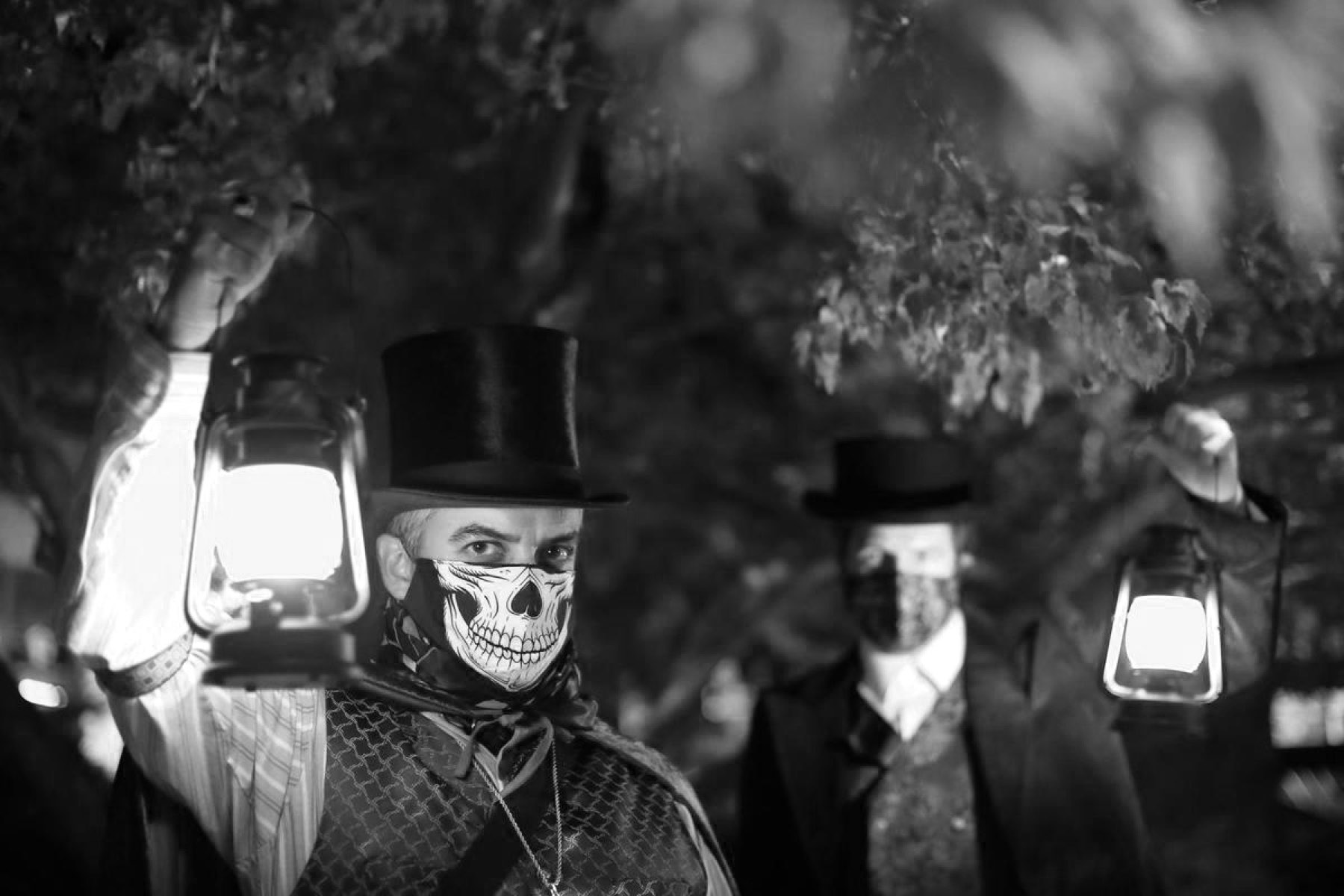
Flagstaff and Route 66 are inseparable. When the Mother Road was commissioned in 1926, it turned a railroad stop into a neon-lit gateway for dreamers, drifters, and, inevitably, travelers who never finished the trip. The road turns 100 in 2026, and Flagstaff is one of the few Arizona cities where Route 66 still works as a main street. The pavement is original in places. So, locals say, are some of the travelers.
The Museum Club: the "Zoo" on the edge of town
Built in 1931 by taxidermist Dean Eldredge, the Museum Club began as a roadside museum of curiosities inside a log cabin once touted as the largest in the nation. The wishbone entryway, made from a bifurcated pine, still frames the door on the eastern edge of Flagstaff's Route 66.
The sadder story belongs to Don and Thorna Scott, who bought the club in 1963. Thorna died after a fall down the stairs in 1973, and two years later a heartbroken Don took his own life in front of the club's fireplace. Locals report a woman in a yellow dress glimpsed through the upper windows, and the creak of a rocking chair on the porch in the quiet hours. The building gets a longer telling in our post on the Museum Club.
The old depot: where the rail met the road
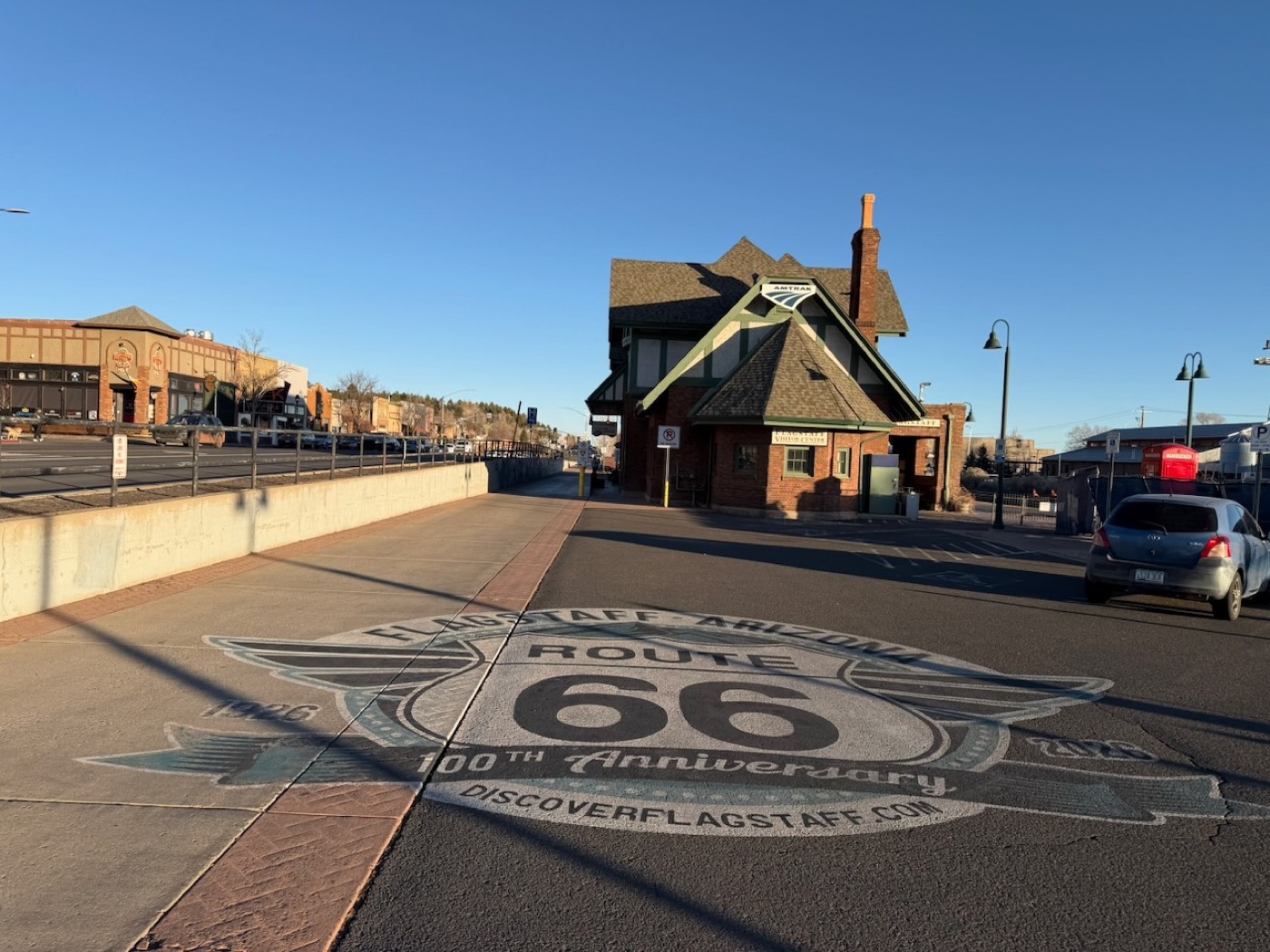
The intersection of the railroad and Route 66 is the busiest corner of Flagstaff's ghost map. At the historic depot, now the Visitor Center, the story belongs to a brakeman named Leo Bart, whose flickering lantern is said to still move along the rails. Travelers waiting for the night train report a sudden drop in temperature and the feeling of being watched by someone standing just out of sight on the tracks.
Neon wars and a priest who loved good roads
Route 66 gave Flagstaff its glow. The DuBeau's 80-foot neon tower competed with the Downtowner's 60-foot beacon for the attention of every arriving motorist, and the 1934 reroute reshuffled whose door the traffic passed. The road also owes a debt few remember: Father Cyprian Vabre, the French priest who believed good roads were God's work, died two years before the road got its number.
The Monte V: neon lights and dark secrets
Opened in 1927, just months after the highway was christened, the Hotel Monte Vista became the meet-me spot for celebrities and road-weary travelers. Stand at the corner of San Francisco and Aspen, look up at the famous neon sign, and the stories find you: the bank robber who, shot during a nearby heist, stopped in the cocktail lounge for one last drink and bled out before finishing it, and the phantom bellboy of Room 210, who still knocks on doors for guests who never answer. There are more, and Flagstaff's haunted history runs far deeper than one hotel.
Walk this story
The Route 66 tour is no longer coming soon. It is here. The Route 66 Centennial Walking Tour, partially funded by the Historic Route 66 Association of Arizona, runs evenings; confirm tonight's start time on the booking calendar. 90 minutes, $29 for adults, $25 for students and $22 for children, timed so the neon takes over as you finish. And if you are picking a date, the dated 2026 centennial events guide lists what is still ahead. Come for the centennial. Stay for the phantom headlights.