Every city keeps one place where the border between the living and the dead feels thin. In Tucson it is a small adobe shrine on South Main Avenue, at the edge of Barrio Viejo, where candle wax has been pooling for more than a century. El Tiradito translates roughly to the castaway, the one who was thrown away, and the man it remembers died in scandal in the 1870s and was buried where he fell. People still light candles for him. More often they light candles for themselves, because somewhere along the way the sinner's grave became a wishing shrine. What follows is the documented record and the reported lore, labeled as each, with the full telling saved for the sidewalk after dark.
A shrine to a sinner, not a saint
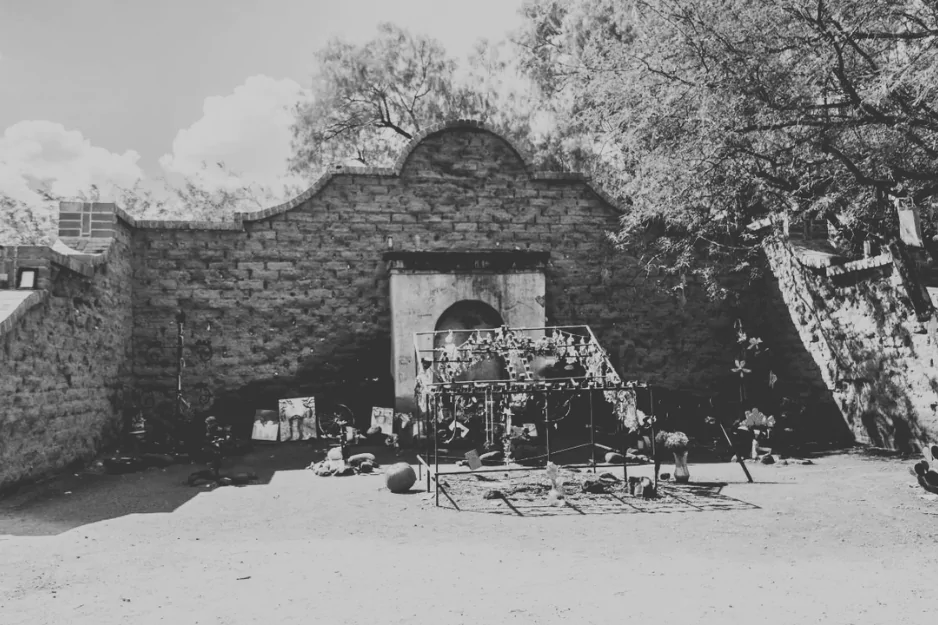
El Tiradito sits at 420 South Main Avenue, an open-air alcove of weathered adobe with a curved parapet, an arched niche, and an ironwork rack that holds the candles. There is no saint here and no church behind it. The shrine is often described as the only one in the United States dedicated to a sinner buried in unconsecrated ground, which is precisely why Tucson never let go of it. Neighbors have tended the spot since the nineteenth century and rebuilt it more than once: an earlier version stood nearby until road work claimed it, the site was re-established in 1927 on land donated by Teófilo Otero, and the adobe structure standing today was raised in 1940 by a New Deal youth works crew. In 1971 the shrine was listed on the National Register of Historic Places, a listing that came to matter far beyond the shrine itself.
The love triangle behind the legend
The story goes that a young ranch hand named Juan Oliveras fell in love with a woman he had no business loving, a woman inside his own family by marriage. The affair was discovered, the discovery turned violent, and Juan died on this ground in the 1870s. Because he died in sin, the church would not bury him in consecrated ground, so the neighbors buried him where he fell and began leaving candles at the grave. The candles never really stopped.
That is the shape of the legend nearly every account shares. The details are another matter. Some accounts make the woman his employer's wife. Others tell it differently, and the identity of the man who caught the lovers, and what happened in the moments after, changes with the teller. The versions have been collected and argued over for a century and a half, and part of the shrine's pull is that Tucson never settled on one official telling. The original researcher behind our Tucson script combed the shrine's accounts for us, tracing which details hold steady across the tellings and which ones wander. Which version our guides trust, and why, is a story we save for the shrine itself, after dark, with the candles lit.
How the wishing ritual works
The ritual has stayed simple for over a century. Bring a candle, light it at the shrine, and make your wish. Tradition holds that if the flame burns through the night, the wish will be granted. Many visitors add a second step: write the wish on a slip of paper, fold it, and press it into one of the cracks and niches in the adobe wall. Look closely and you will see hundreds of them, along with photographs, flowers, milagros and handwritten notes left by everyone who came before you.
A few points of etiquette, offered plainly. The wishes in the wall are private petitions, so leave them folded. The shrine is a working sacred place, not a photo prop: neighbors still hold vigils here, and some of the offerings mark real grief. Take photographs respectfully, keep voices low in the evening, and leave every offering exactly where it lies. As locals tell it, the shrine keeps its own ledger, and those who treat it carelessly come to regret it. That last part is folklore. Behave as if it is not.
The shrine that stopped a freeway
Here is the part of the story that is not folklore at all. In 1971 Tucson was weighing plans for the Butterfield Expressway, a crosstown freeway routed through Barrio Viejo, and by contemporary estimates the project would have displaced roughly 1,200 residents. The barrio had already lost many of its northern blocks to the urban renewal projects of the 1960s. The freeway would have finished the job.
The neighborhood organized. Residents and activists formed the El Tiradito Committee and made an argument that was novel at the time: the little shrine in the freeway's path was not a curiosity but a historic place, worth listing on the National Register of Historic Places. The nomination succeeded in November 1971, and the shrine is often cited as the first property in Arizona listed for its traditional cultural significance rather than its architecture. With a listed landmark standing in the right-of-way, the expressway plan was turned back, and the barrio's Sonoran rowhouses, often called the largest surviving collection of nineteenth-century adobe buildings in the country, are still standing today. There is an irony folded into the victory: a road project had destroyed the shrine's original site decades earlier. A road took the first shrine. The rebuilt shrine took back the road.
Is Barrio Viejo haunted?
Ask around the neighborhood and you will not get a simple no. Barrio Viejo is one of the oldest corners of one of the oldest continuously inhabited places in the country, and its reported lore runs deeper than the shrine: the small ghost locals call La Muchachita, said to appear along Simpson Street; the sound of running water under streets where no water should be; and El Tiradito itself, where visitors describe whispers, cold air on warm nights, and candle flames that misbehave when the air is still. All of it is reported lore, gathered from neighbors and guests, and we present it as exactly that. We collected many of the neighborhood's accounts in The Spirits of Barrio Viejo. And if you would rather meet the barrio by daylight, its painted walls are the other half of its character: our Barrio Viejo murals walking guide maps the neighborhood one wall at a time.
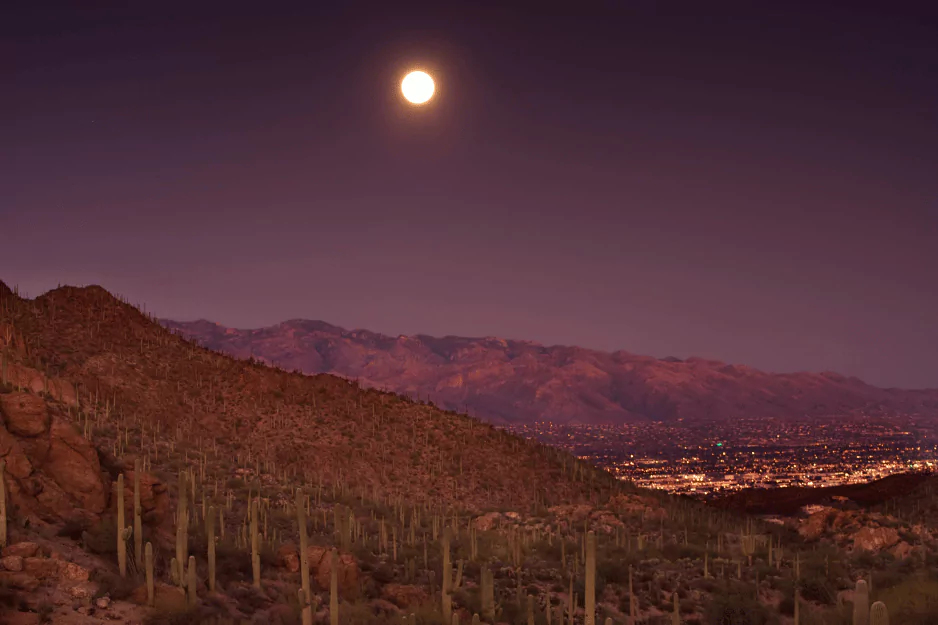
Visiting El Tiradito
The shrine is free, open-air, and reachable at any hour on a public street at 420 South Main Avenue, just west of the Tucson Convention Center and roughly a fifteen-minute walk from Hotel Congress. Evening is the best time to see it, when the candles are lit and the adobe still holds the day's warmth. Street parking is usually easy to find nearby. Remember that the surrounding blocks are a living residential neighborhood, so admire the rowhouses from the sidewalk. For the wider picture of the city's dark history, start with our guide to the haunted places in Tucson or everything we run in Tucson; for the research story behind this page, read Unraveling the Mystery of El Tiradito.
Questions people ask
What is the El Tiradito wishing shrine?
El Tiradito is an open-air adobe shrine at 420 South Main Avenue in Tucson's Barrio Viejo, dedicated to a man who died in an 1870s love triangle and was buried in unconsecrated ground where he fell. Visitors light candles and tuck folded paper wishes into the wall, a tradition that has run for more than a century. The shrine has been on the National Register of Historic Places since 1971.
How do you make a wish at El Tiradito?
Bring a candle, light it at the shrine, make your wish, and leave the candle burning. Tradition holds that the wish is granted if the flame lasts until morning. Many visitors also write the wish on a slip of paper, fold it, and press it into a crack in the adobe wall alongside the hundreds already there. Leave other people's offerings and wishes untouched.
Is Barrio Viejo haunted?
Locals tell it that way. The neighborhood's reported lore includes La Muchachita, a child spirit said to appear along Simpson Street, unexplained sounds of running water beneath the streets, and the whispers and cold spots visitors describe at El Tiradito itself. None of it is documented fact, and we label it as lore, but the accounts have stayed strangely consistent across generations.
Is downtown Tucson safe to walk at night?
Generally yes, with ordinary city awareness. The Congress Street blocks are busy and well lit into the evening, and Barrio Viejo is a quiet residential neighborhood where the main streets stay calm after dark. Walk with a companion, keep to lit streets, and treat the homes with respect. Our evening tours run through the summer, with current departure nights in the booking calendar, and the route was planned around comfortable, well-traveled blocks.
Hear the full telling at the shrine
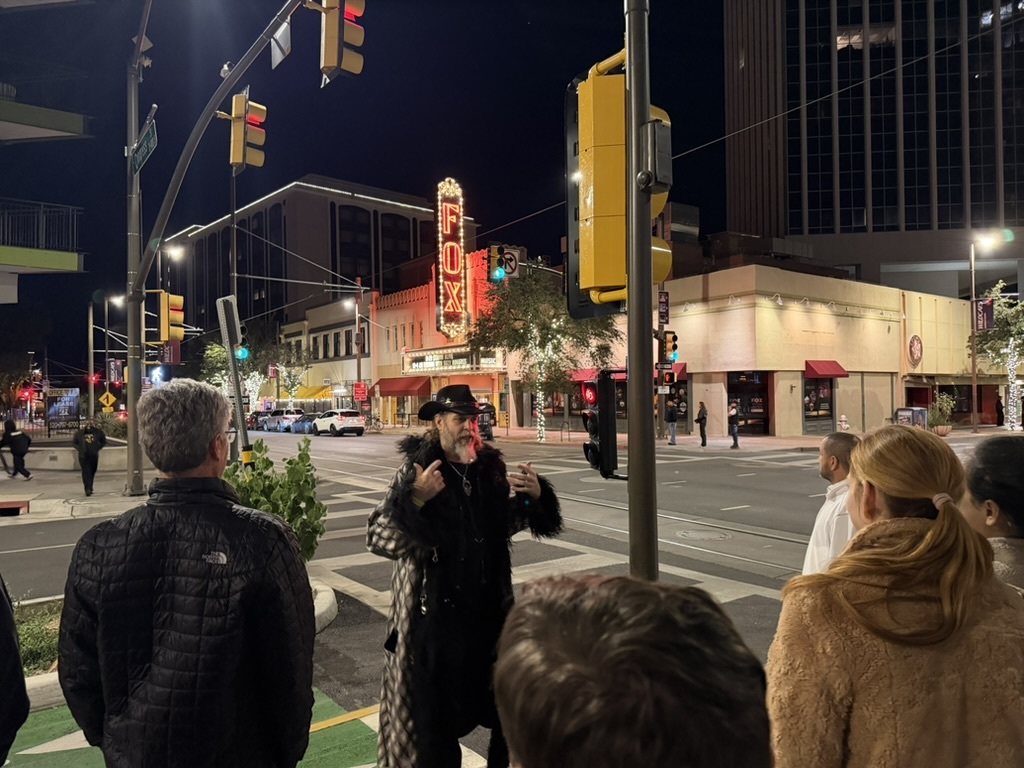
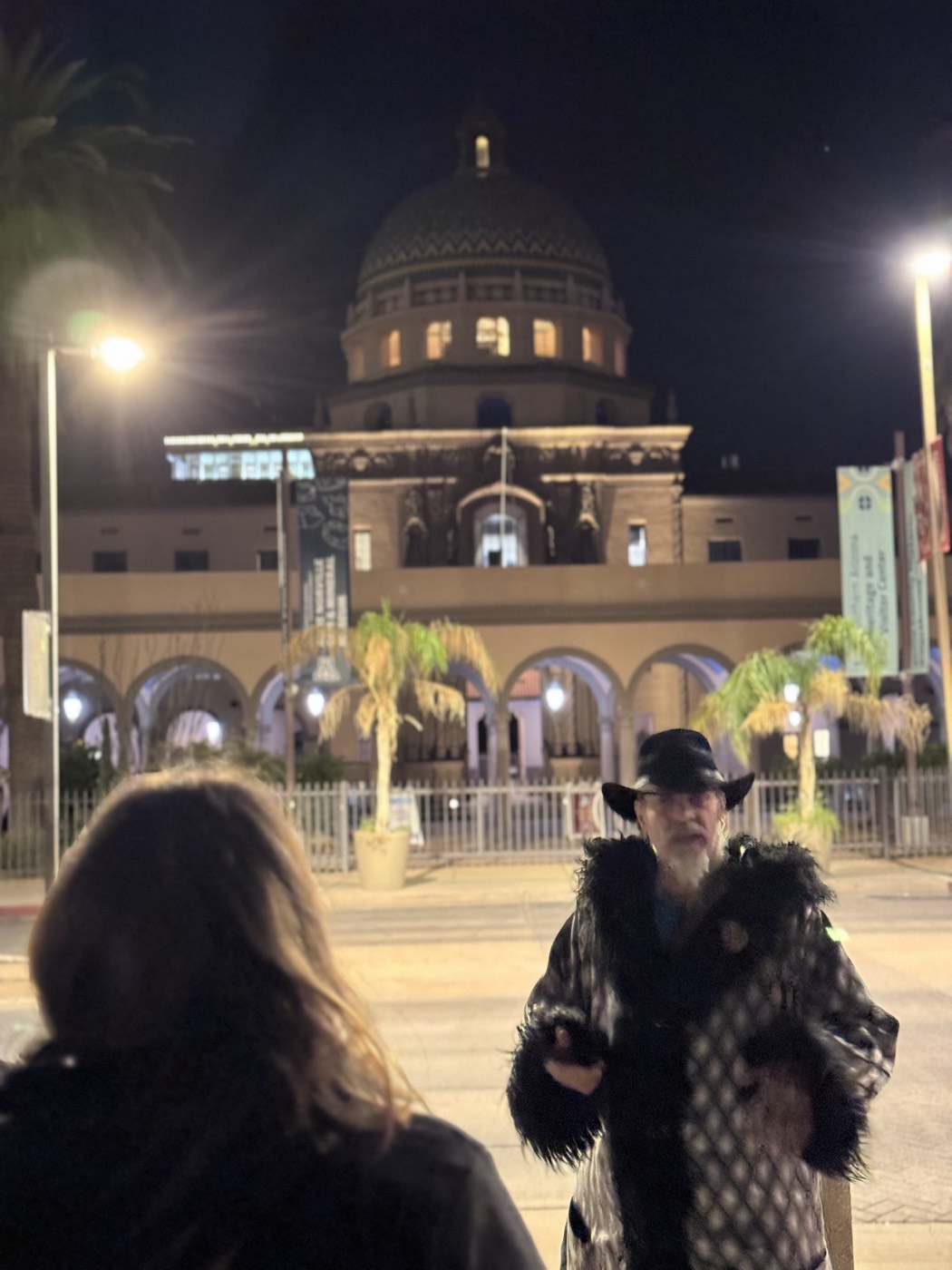
El Tiradito is a listed stop on our Downtown Tucson Haunted History Tour: 90 minutes and about a mile through the haunted heart of the Old Pueblo, meeting at Hotel Congress with nightly departures at 8 PM. Tickets are $29 for adults, $25 for students and $22 for children. The tour holds a 4.7 of 5 rating across 25+ TripAdvisor reviews for this tour as of September 2026. The stories are researched before they are performed, the shrine gets the full telling with the candles lit, and current departure times are in the booking calendar below. Booking is straightforward: full refund when canceled 24 or more hours before the tour, no refund inside 24 hours.