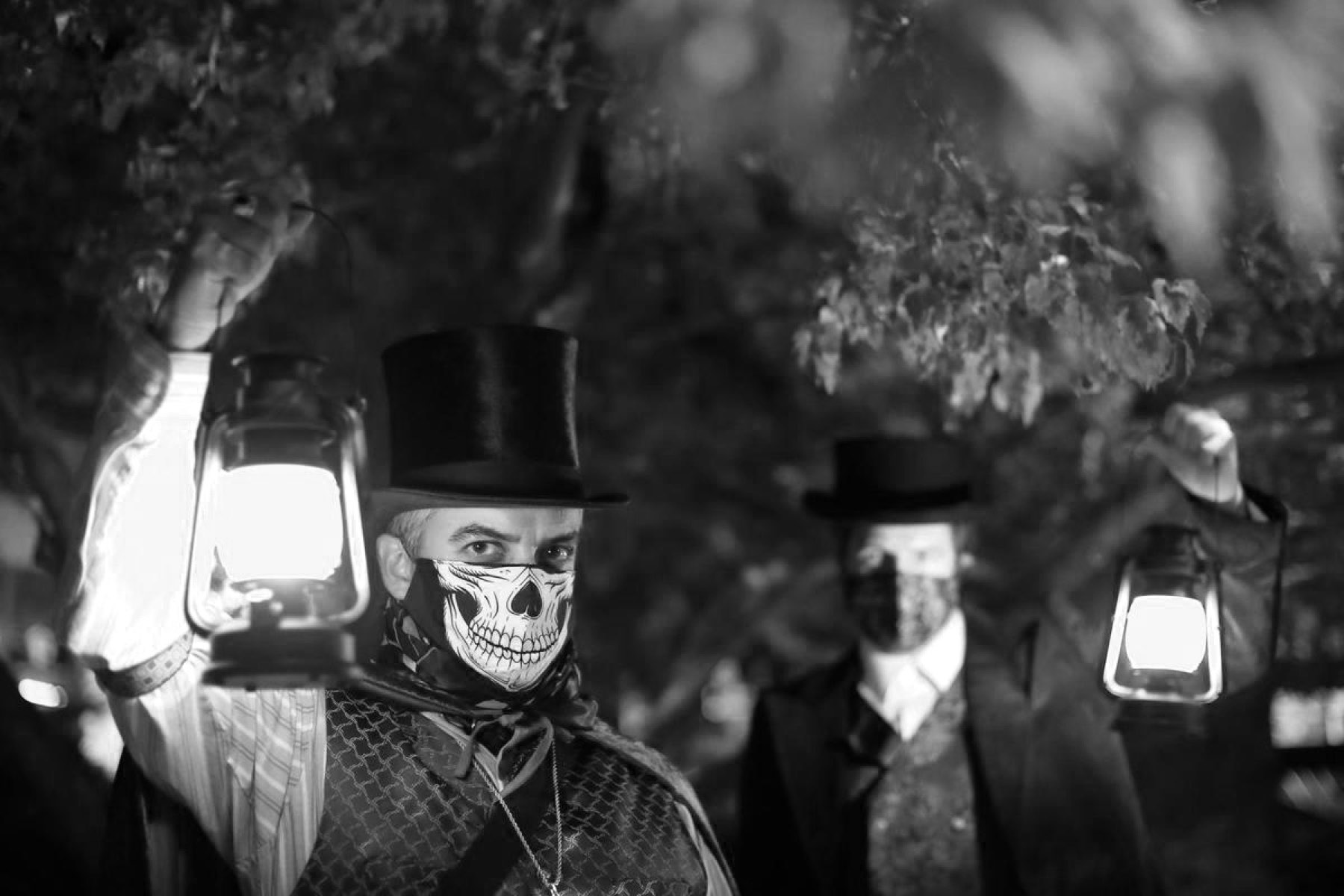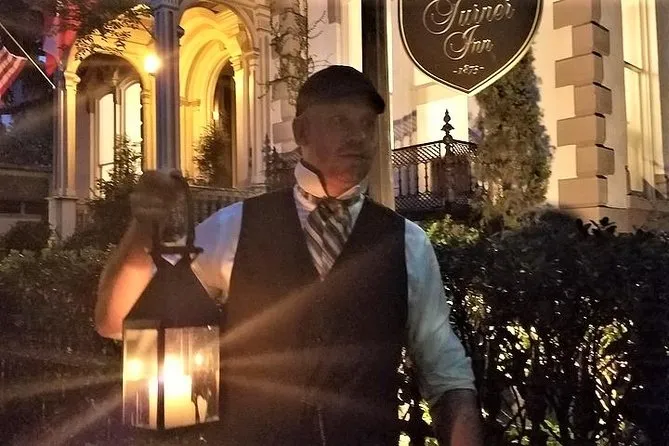
Savannah History and Haunts Candlelit Ghost Walking Tour is a 90-minute lantern-led walk through the historic district, run by the operator of the same name and booking from $39 per person at our July 30, 2026 check. It runs after dark and frames the city through four subjects the listing names: war, executions, murders and mystery. Of the twelve Savannah ghost listings we checked that day it carries the largest review count at 3,445 and shares the top rating at 4.9, and it is marked wheelchair accessible, unlike several rivals. What it does not do is publish a stop list. It suits people who want documented history told on the street, not a gear-based ghost hunt.
| Detail | What the listing shows |
|---|---|
| From price | $39 per person (checked July 30, 2026) |
| Duration | 1 hour 30 minutes |
| Departures | After dark. No clock time verified. |
| Stops | None published. 8 of the 12 Savannah listings we checked name theirs. |
| Ages | Adult band starts at 13; child (7 to 12) and infant (0 to 6) bands also exist. Children must be accompanied by an adult. |
| Group size | Up to 30 |
| Accessibility | Wheelchair and stroller accessible |
| Meeting point | A designated location, about 15 minutes early. Confirm it when you book. |
| Cancellation | Free, up to 24 hours ahead at our July 28, 2026 check. |
| Rating | 4.9 from 3,445 Viator reviews, the largest sample of the twelve |
| Operator | Savannah History and Haunts. We do not run this tour. |
What you will see
Start with what the listing withholds: it names no stops, where 8 of the 12 Savannah listings we checked publish an itinerary. So the four subjects are the contract, and the squares that carry them are where the first correction lands. Johnson Square was marked off on February 9, 1733, the ninth day of the settlement, and it is the one square Oglethorpe laid out; the rest followed its template over the next 118 years, the last in 1851, so the twenty-four-square master plan guides describe was never a plan (Georgia Historical Society, Jefferson Hall). Nor was the open ground a gift of parkland: Hall reads it as fire prevention, Oglethorpe having seen London after its great fire, and as militia mustering space (Hall on the squares).
Executions here mean Alice Riley, and Wright Square is sold as the place it happened. What is documented is short: Riley, an Irish transported servant, was hanged on January 19 or 20, 1735 for the murder of her master William Wise, alongside a fellow servant named Richard White, and she was the first woman executed in Georgia (Georgia Historical Society). Most of the rest is later invention. Hall's objection to the square as the gallows site is concrete: neither the courthouse nor the log house stood in that ward until Oglethorpe ordered them there in 1736, a year after she died, and the location of Georgia's first capital execution is not known (Hall on Alice Riley). The curse people repeat, that Spanish moss will not grow here because Riley cursed the ground, fails on a municipal fact: the City cleared moss from eleven squares north of Oglethorpe Avenue for maintenance and cost (Hall).
War leaves the heaviest documented ground. Colonial Park Cemetery closed to burials on July 1, 1853, its last official interment coming on April 19, 1861; Union troops occupied Savannah on December 24, 1864, and several hundred camped in the burial ground and sheltered in its vaults (Hall, Colonial Park Cemetery). The mass grave of 700 yellow fever victims that tours describe is not established, and the flourish about the true number being 666 has no source at all. The real scale is bleaker: 13,345 registered Savannah deaths between 1803 and 1853 against fewer than 700 surviving headstones. Sherman did not headquarter at the Marshall House, which Union troops used as a hospital; he worked from the Green-Meldrim House on Madison Square from December 22, 1864 to February 1, 1865. The amputated limbs said to lie under the Marshall House floorboards are unsourced, and the hotel's own history page records artifacts and no human remains.
Murder has one address with a paper trail. Jim Williams shot and killed Danny Hansford, 21, in the study at 429 Bull Street on May 2, 1981; after four trials, the only time in Georgia history one person has been tried four times for the same crime, he was acquitted in May 1989 and died in the house in January 1990 (James Arthur Williams). Nobody named Mercer ever lived in the Mercer Williams House, begun in 1860 for General Hugh Mercer and finished about 1868 for John Randolph Wilder. Mystery is where the local trade is weakest. The private house at 432 Abercorn Street is marketed on a story the record contradicts, since Benjamin Wilson died of natural causes at Colorado Springs on February 15, 1896 and both his daughters lived to adulthood (Savannah First-Timer's Guide). And Matilda Sorrel did not die in the Sorrel-Weed House: Francis Sorrel had sold it to Henry D. Weed in June 1859, and the family was next door at 12 West Harris Street when she died in March 1860.
Who it suits
This is 90 minutes on foot after dark at a storytelling pace, in a group of up to 30. It is marked wheelchair and stroller accessible, the adult band starts at 13, and the child and infant bands mean younger children can be booked with an adult along.
- Skip it if you want a named itinerary. No stops are published, so ask the operator first if one house or square is why you are going.
- Skip it if you want a small group. The cap is 30; two Savannah rivals we checked cap at 16.
- Skip it if you want to sit down. This is cobblestones and uneven ground in the dark.
- Skip it if you want gear. Nothing on the listing describes a ghost hunt.
- Choose it for the largest review sample of the twelve listings we checked, and accessibility the trolley lacks.
How it compares
Three listings frame the choice. Genteel and Bard's Savannah Dark History and Ghost Encounter Walking Tour is $35 for 1 hour 50 minutes at a cap of 22, rates 4.8 across 1,700 reviews, and publishes a seven-stop itinerary including Wright Square, the Sorrel-Weed House and Colonial Park Cemetery, so take it if the route matters. Savannah's Ghost City Dead of Night Walking Night Tour is $34.99 for the same 90 minutes at the same cap of 30 and also names its stops, but its adult band starts at 16 and it rates 4.4 across 2,556 reviews.
Savannah Ghosts and Gravestones Trolley Tour is the seated alternative at $42.80 for 1 hour 15 minutes, and accessibility runs the other way there: the trolley is not wheelchair accessible while this walk is. It also holds the weakest rating of these three at 4.0 across 3,202 reviews. At $39 this walk sits near the top of a field whose from-prices ran between $30 and $42.80 in the same check, so what you are paying for is the track record. See also Savannah ghost tours compared and our roundup of the best Savannah ghost tours.
Questions people ask
Does the listing say which places it visits?
No. It names its subjects, war, executions, murders and mystery, but no stops. Eight of the twelve Savannah listings we checked publish an itinerary and this is not one, so ask the operator if a particular house or square is why you are going.
How long is it and what does it cost?
Ninety minutes, from $39 per person at our July 30, 2026 check. Prices move, so confirm the current rate on the booking page.
What time does it start?
The listing says only that the tour takes place at night, and asks you to reach the meeting point about 15 minutes early. We verified no clock time, so check the times offered when you book.
Can children come along?
The adult band starts at 13, and the listing also carries a child band for ages 7 to 12 and an infant band for 0 to 6, so younger children can be booked. Children must be accompanied by an adult.
Is it wheelchair accessible?
The listing marks it both wheelchair and stroller accessible. Check this tour by tour in Savannah, because the seated Ghosts and Gravestones trolley tour is not.
Will it take me to 432 Abercorn Street?
There is no way to tell, because no stops are published, though two other Savannah listings we checked do name it. If you hear the usual story, note that Benjamin Wilson died of natural causes in Colorado Springs in February 1896 and both his daughters lived to adulthood. It is a private home, so read about it rather than calling on it.