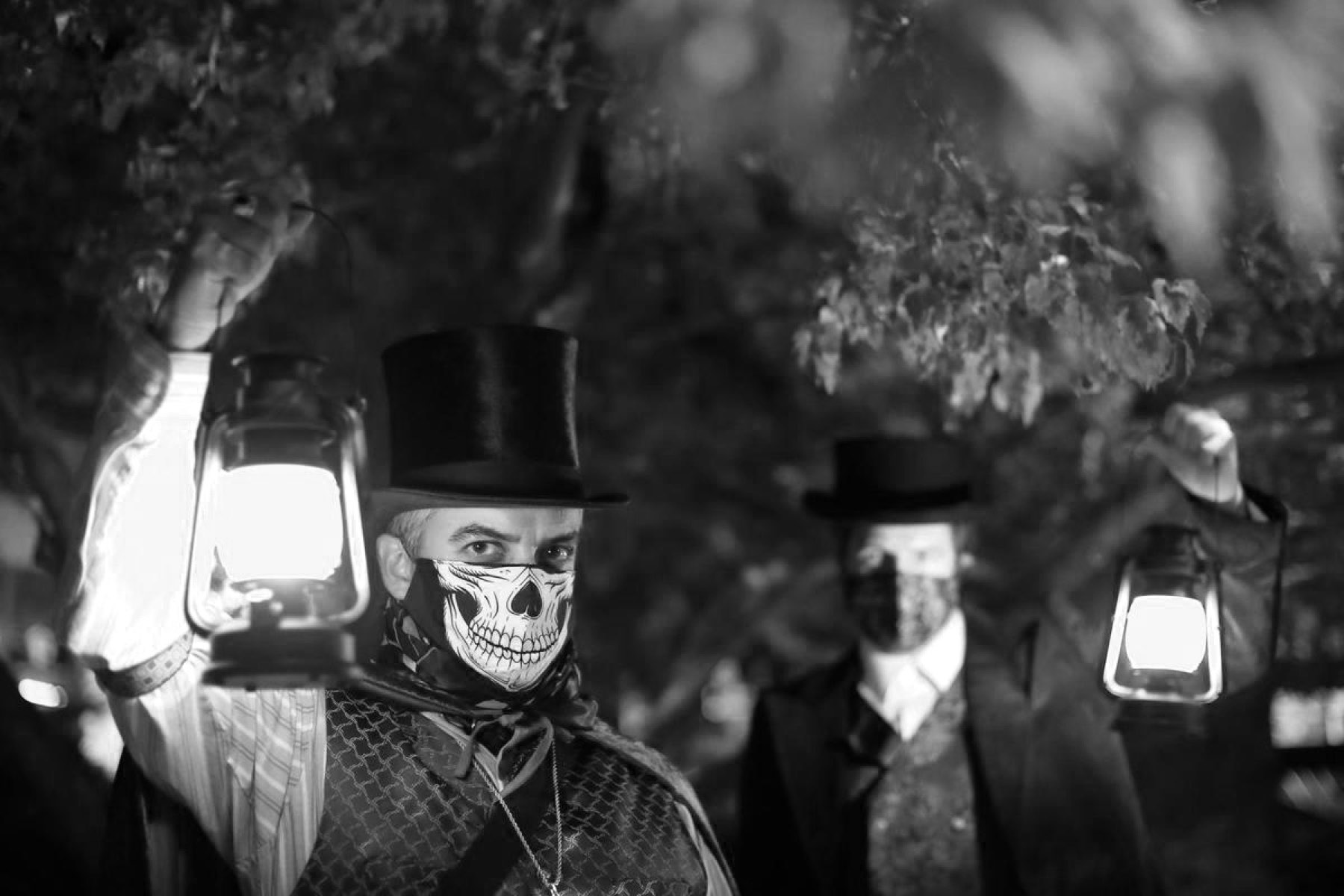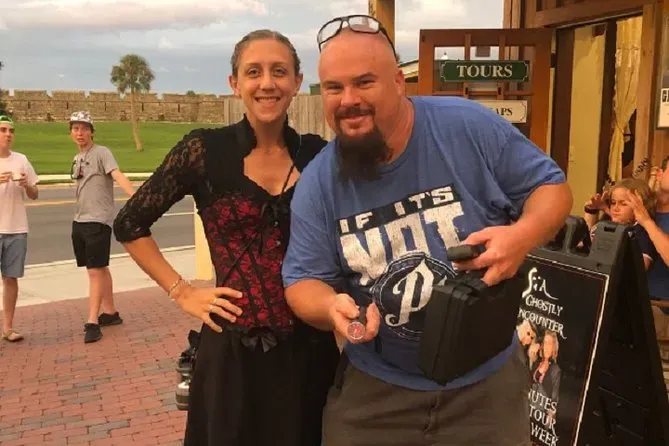
St. Augustine Ghost Tour: A Ghostly Encounter is a 90-minute evening walk from the operator of the same name, sold on Viator from $30 per person at our August 2, 2026 check. It carries 4.7 from 2,475 reviews, the largest review base among the twelve bookable St. Augustine listings we compare, by a wide margin. The listing names exactly two stops and flags both as pass-bys: the Oldest Wooden School House and the Castillo de San Marcos. This is a street-level walk with no interiors named and no further itinerary recorded, and we are not going to invent one for it.
The operator states that its tours run rain or shine, and the listing bars travelers with heart problems or other serious medical conditions. We are Arizona guides who research haunted history in other cities, so read this as a write-up of somebody else's tour, not one we run.
| Detail | What the listing showed on August 2, 2026 |
|---|---|
| From price | $30 per person |
| Duration | 1 hour 30 minutes |
| When it runs | Evening. No clock time is verified. |
| Rating | 4.7 from 2,475 reviews |
| Availability | Bookable at our August 2, 2026 check |
| Age bands | Infants 0 to 3, children 4 to 10, adults from 11 |
| Accessibility | Listed wheelchair accessible and stroller accessible |
| Weather | The operator states the tours run rain or shine and notes that Florida weather changes rapidly |
| Restrictions | Not for travelers with heart problems or other serious medical conditions |
| Cancellation | Free up to 24 hours before the start |
| Stops named | Two, both flagged pass-by: the Oldest Wooden School House and the Castillo de San Marcos |
| Operator | A Ghostly Encounter |
What you will see
The Oldest Wooden School House at 14 St. George Street is the small cedar and cypress building everyone walks past on the pedestrian block, with a heavy chain wrapped around it. Start with the date, because almost everything printed about this building gets it wrong. The figure in wide circulation is 1716. The attraction's own history page says the standing building was put up about 1800 to 1810 by Juan Genopoly, a Greek carpenter from Mani (its own history page), and the federal inventory independently dates 14 St. George Street to 1788 to 1810 and records it as the Genoply School House (NRHP 70000847). Both better sources agree with each other and disagree with the popular claim, which is also self-defeating: the Genopolys did not reach Florida until 1768, among the indentured labourers of Turnbull's New Smyrna plantation, and the survivors did not walk north to St. Augustine until 1777. Genopoly bought this lot from Jesse Fish on 1 October 1780, and the school charged twelve and a half cents a week for younger students until the last class in 1864. Three cautions. Oldest wooden schoolhouse in the United States is the attraction's trade name rather than an adjudicated finding. The chain is a twentieth-century addition reported as a hurricane anchor, and it restrained nobody. And the named child some operators seat at a desk here should be treated as invented until somebody produces a burial record.
The Castillo de San Marcos is the other pass-by, and its real history outruns its ghost stories. The National Register nomination says the coquina fort was built in 1672 to 1695 and remodeled in 1738 to 1740, 1752 to 1756 and 1762, and that it went British in 1763, Spanish again in 1784 and American in 1821 (NRHP 66000062). Never taken by assault is accurate; it changed hands three times all the same, by treaty each time. What gives the fort its weight is the prison record. Seminole prisoners were held here from 1837, and Coacoochee led twenty of them out on the night of 29 November that year (National Park Service). Plains prisoners arrived under Lieutenant Richard Pratt in May 1875, Apache prisoners from 1886, and by January 1887 the nomination counts 447 prisoners in the fort, with tourists coming to look at them. The dungeon most tours sell is not one: the sealed room opened in the 1830s was the fort's first permanent powder magazine, and the Park Service publishes its own debunking of it. Osceola was imprisoned here but died at Fort Moultrie on 30 January 1838, and Geronimo was never held here.
Who it suits
This is the volume pick and the family-shaped one: 90 minutes in the evening, wheelchair and stroller both listed, booking bands that run down to infants, and a rain-or-shine policy. Two named stops means the walk is carried by the guide rather than the itinerary, which is the honest way to describe what 2,475 reviewers have been rating.
- Choose it if a large review base is how you decide, because at 2,475 reviews it has nearly six times the corpus of the 4.9-rated $25 Spyglass walk we weigh it against below.
- Choose it if you are booking with small children, since the bands run from infants at 0 to 3 through children 4 to 10.
- Choose it if you need stroller or wheelchair access, both of which the listing shows.
- Skip it if you want a stop-dense route, because the listing names two stops and both are pass-bys.
- Skip it if anyone in the party has heart problems or another serious medical condition, which the listing bars.
How it compares
Ghost Tour of St. Augustine: The Original Haunted History Tour from Spyglass Tours runs the same 90 minutes for $25 and rates 4.9, but from 426 reviews rather than 2,475, and it names four stops to this walk's two. That is the real trade: five dollars and a longer named-stop list against a review base nearly six times the size. The same operator runs a more intense sibling, Paranormal Encounter in St. Augustine, at $75 for two hours with 4.7 from 68 reviews; that one is not listed wheelchair accessible, is not recommended for pregnant travelers, and opens its dates in short windows rather than on a standing schedule.
Questions people ask
What if it rains?
The operator states that its tours run rain or shine and notes that Florida weather changes rapidly. That is the whole of the policy we captured.
How long is it, and when does it run?
One hour thirty minutes, in the evening, from $30 per person, checked on August 2, 2026. No clock time is verified.
Can small children come?
The bands run from infants at 0 to 3, through children 4 to 10, with adults from 11. It is the only walk we compare here with a dedicated infant band.
Do you go inside the schoolhouse or the fort?
No. Both named stops are flagged as pass-bys, so this is a street-level walk.
Are there any health restrictions?
Yes. The listing states it is not suitable for travelers with heart problems or other serious medical conditions.
Why does the schoolhouse date matter?
Because the number you will see nearly everywhere, 1716, is contradicted by the attraction's own history page and by the federal inventory. A guide who leads with 1716 is repeating a claim the building's owners do not make.