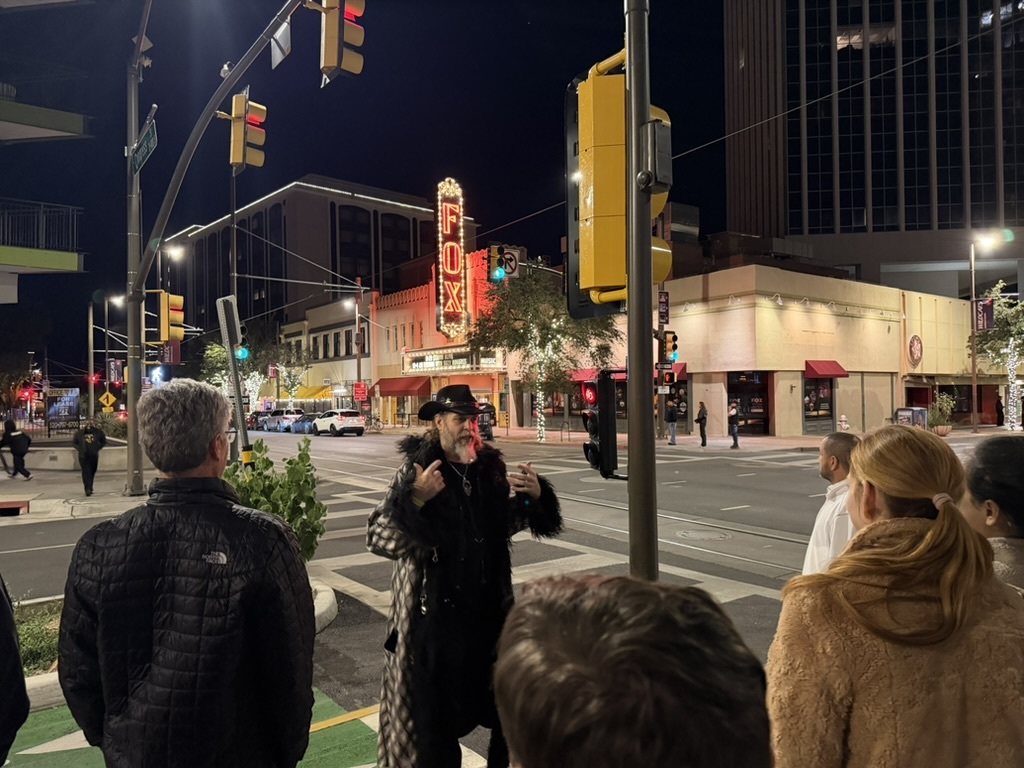
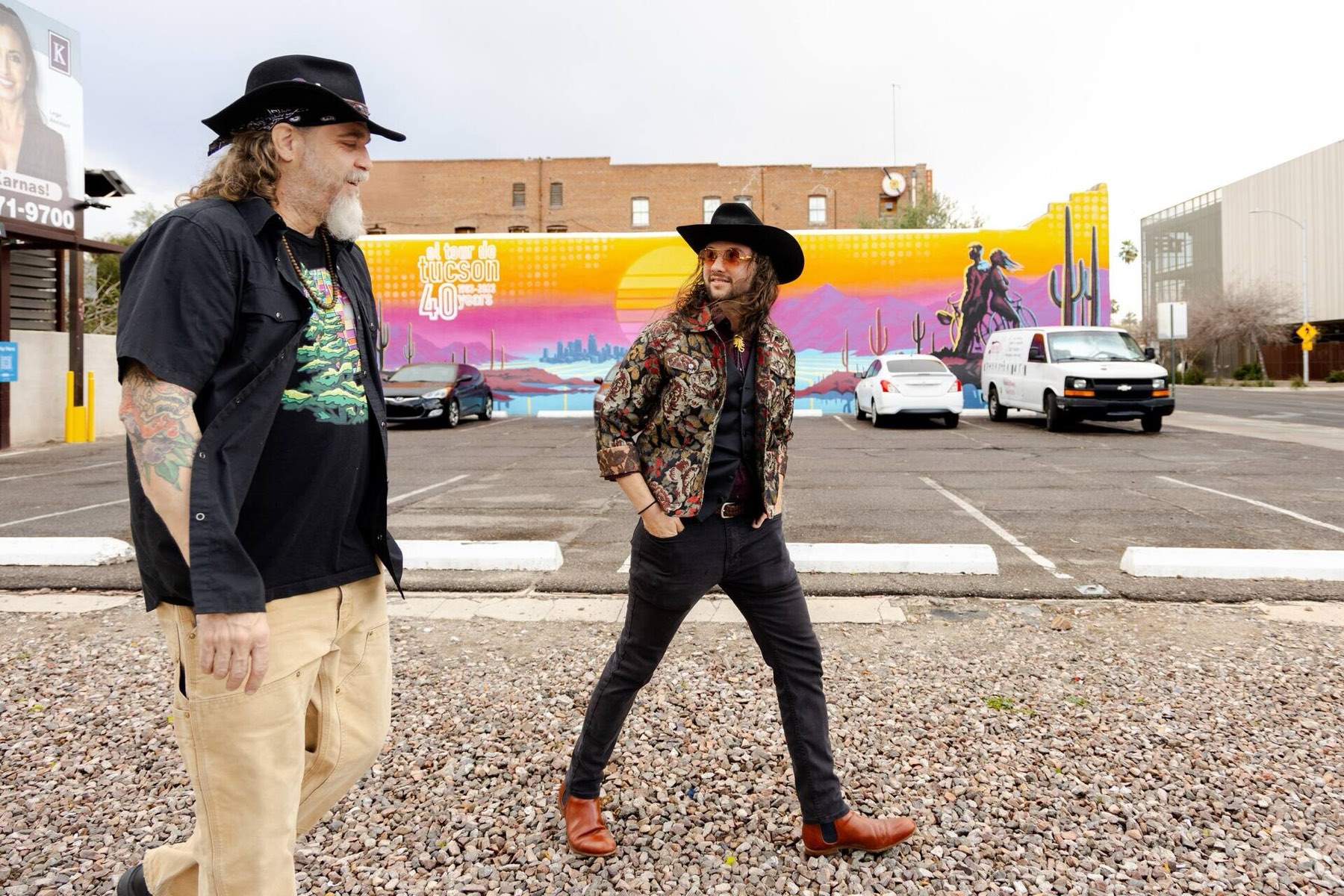
The Pioneer Hotel at Stone Avenue and Pennington Street was Tucson's grand hotel for four decades, and on the night of December 20, 1970, it became the site of the deadliest building fire in Arizona's history. Twenty-eight people died that night, and a twenty-ninth victim died months later of injuries. This page is the documented record: the hotel Tucson was proud of, the fire that ended it, what the city changed afterward, and what the building is now. Where reported lore appears, it is labeled as exactly that. On our tour, this stop is told as a memorial first.
Tucson's grand hotel
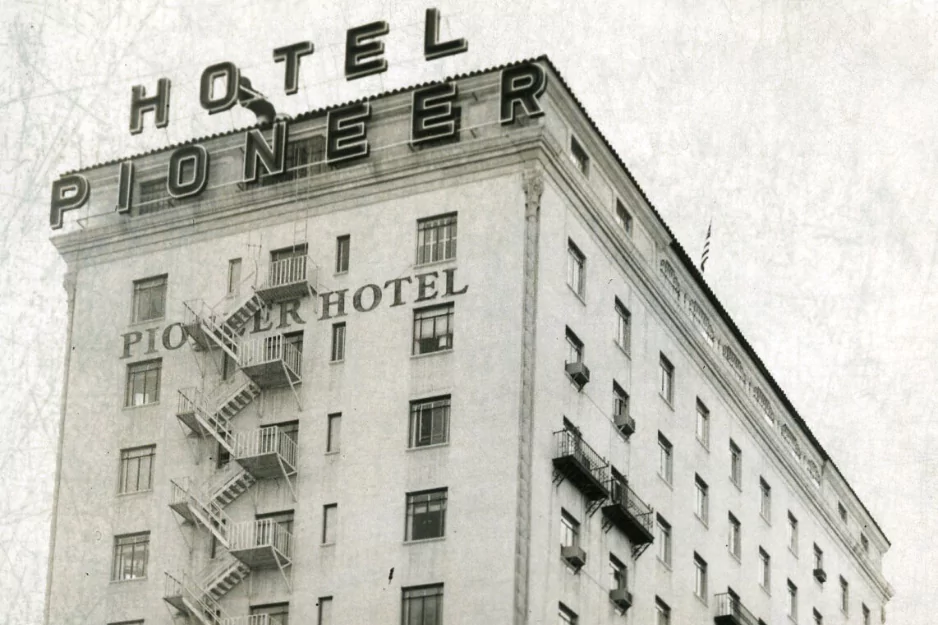
The Pioneer opened on December 12, 1929, at Stone and Pennington in the heart of downtown, built by the merchant Albert Steinfeld, whose family had owned the parcel since 1904 and whose department store anchored the neighborhood. Tucson architect Roy Place designed it in Spanish Colonial Revival style; his domed Pima County Courthouse, finished the same year, still stands a short walk away on our route. At eleven stories, the Pioneer International Hotel was one of Tucson's first high-rises and the tallest building in the city.
For four decades it was where downtown gathered. Banquets, conferences, holiday parties, and the city's celebrations ran through its ballroom, which period advertising called the largest in the country, and the hotel drew Tucson's elite along with well-connected visitors from Sonora. It was also advertised, in the confident language of its era, as fireproof. Harold Steinfeld, Albert's son, lived in the penthouse with his wife Margaret, known as Peggy.
The night of December 20, 1970
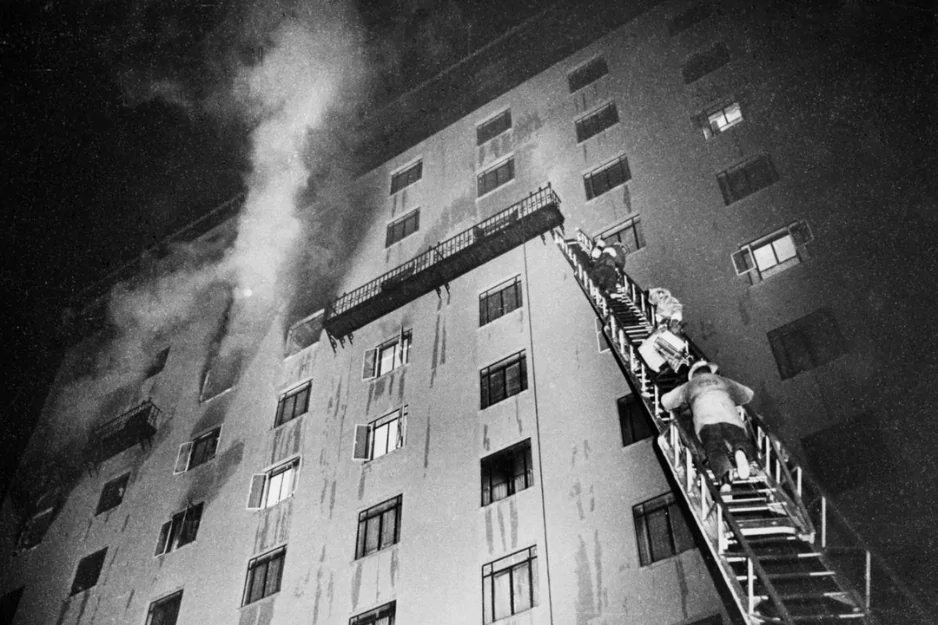
Shortly after midnight on Sunday, December 20, 1970, fire broke out on the hotel's fourth floor. The building had no sprinkler system, no alarm system, and combustible carpeting in its corridors, and its open stairways acted as chimneys, carrying fire and smoke up through the floors above with terrible speed. The hotel held 113 registered guests that night, and roughly 650 more people were downstairs at three Christmas banquets, the best remembered of them the Hughes Aircraft company party. The banquet crowds on the ground floor got out. The people on the upper floors were the ones trapped.
Firefighters worked aerial and ground ladders from window to window through the night, and guests came down on ropes of knotted bed sheets. Twenty-eight people died. A twenty-ninth victim, injured that night, died months later, which is why accounts of the fire cite both numbers. Among the dead were Harold Steinfeld, 82, and Peggy Steinfeld, in the penthouse of the hotel his father had built. Tucson's assistant fire chief said afterward that if the building had had a sprinkler system, no one would have died.
What the fire changed
The Pioneer fire remains the deadliest loss of life to fire in a building in Arizona's history, and the reform it forced is its most lasting legacy. Tucson adopted a new fire code requiring smoke detectors and sprinkler systems in all buildings four stories and higher, and the disaster helped push high-rise fire standards well beyond one city. It is the kind of reform that arrives after catastrophe, and it is written into every tall building downtown.
The hotel itself never recovered. Within a few years the hotel era at Stone and Pennington was over, and the fire, together with the pull of the suburbs, hastened the long quiet that settled over downtown Tucson in the decades that followed.
The Pioneer Building today
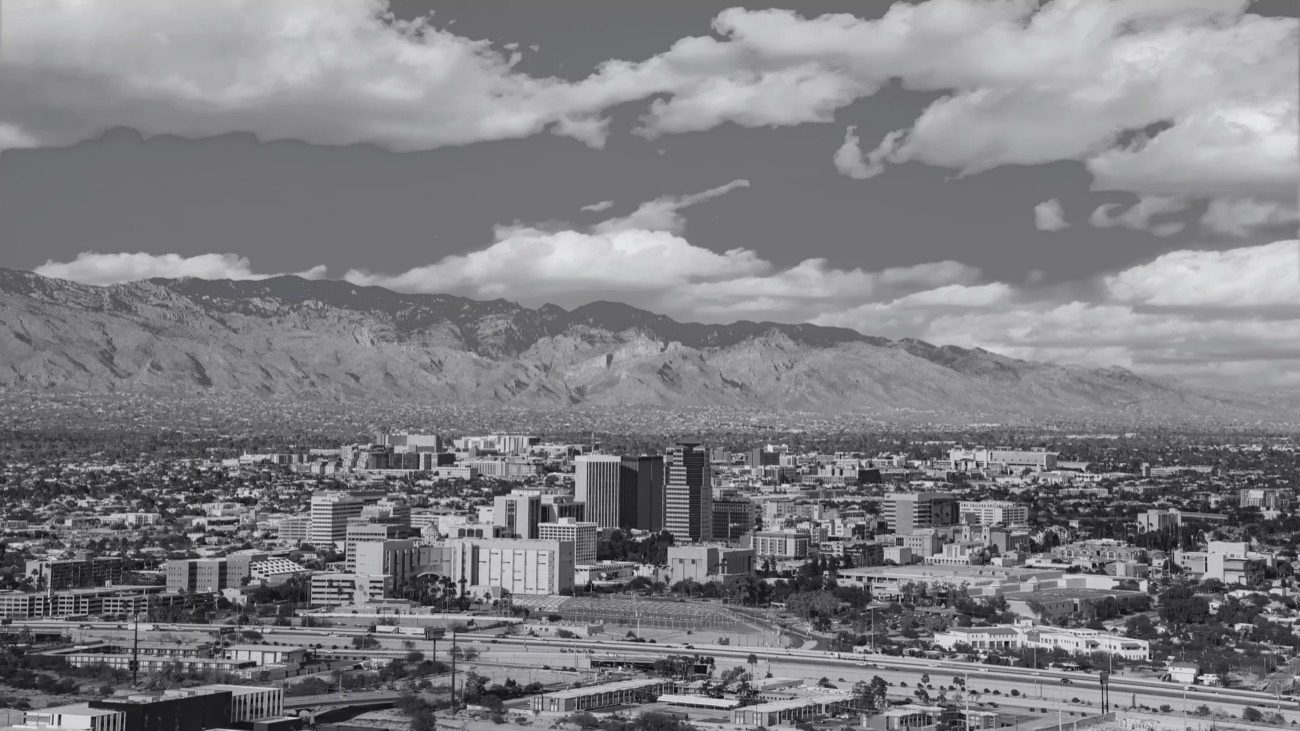
The building survived, and it still stands at 100 North Stone Avenue as the Pioneer Building, a private office building with law firms, architects, and software companies behind its windows. It is not open to the public, and there is no interior access; our tour views it from the public sidewalk, where the story belongs. Look up from Stone Avenue and it remains one of the handsomest facades downtown.
Tucson lost two grand hotels, each in its own way. The Santa Rita Hotel came down entirely, leaving a vacant corner where guides have watched guests go quiet for years. A few blocks east, Hotel Congress weathered a famous fire of its own in January 1934, a story with a very different ending. All three are in our guide to Tucson's haunted hotels.
How we tell this story
Some stops on our route are playful, and this one is not. The Pioneer is told as a memorial: we name what was lost, we tell the documented record plainly, and we talk about what the city learned, because the learning is the part of this story that saved lives later. We do not perform the tragedy, we do not go inside, and we do not run a ghost hunt at a place where 28 people died. The fuller narrative of the night is in our telling of the Pioneer Hotel fire of 1970, and for the rest of the city's dark record, start with our guide to the haunted places in Tucson.
What people report
What follows is reported lore, gathered over the years from building workers and local retellings, and we present it as exactly that. People who work in the building have described a faint smell of smoke on the upper floors with no source ever found, footsteps and running sounds in halls and stairwells after hours, and a reluctance to stay late, especially in the winter weeks around the fire's anniversary. One often-repeated account has a visiting professor reportedly recording footfalls on a floor known to be empty. None of it is documented fact. The documented record above is heavy enough on its own, which may be why the lore here stays quiet, and why we tell it quietly too.
Questions people ask
How many people died in the Pioneer Hotel fire?
Twenty-eight people died the night of December 20, 1970, and a twenty-ninth victim died months later of injuries sustained in the fire, which is why sources cite both 28 and 29. It remains the deadliest building fire in Arizona's history, and it led Tucson to require sprinklers and smoke detectors in all buildings four stories and higher.
Was the Pioneer Hotel fire arson?
Investigators at the time suspected arson, but the cause was never conclusively established and is formally unresolved. Our telling is about the people who were lost and how the city changed.
What is the Pioneer Hotel building now?
It is the Pioneer Building, a private office building at 100 North Stone Avenue in downtown Tucson. It has not operated as a hotel since the 1970s, when the hotel era ended in the years after the fire.
Can you go inside the Pioneer Hotel?
No. The building is privately owned office space and is not open for tours or interior visits. Our Downtown Tucson Haunted History Tour stops at the public sidewalk on Stone Avenue, where the story is told.
Is the Pioneer Hotel haunted?
Locals tell it that way, and we label it as lore. Building workers have reported a sourceless smell of smoke on the upper floors, footsteps in empty halls, and a shared reluctance to stay late in winter. None of it is documented fact, and given what happened here, we keep the lore brief and tell it quietly.
Walk this story with respect
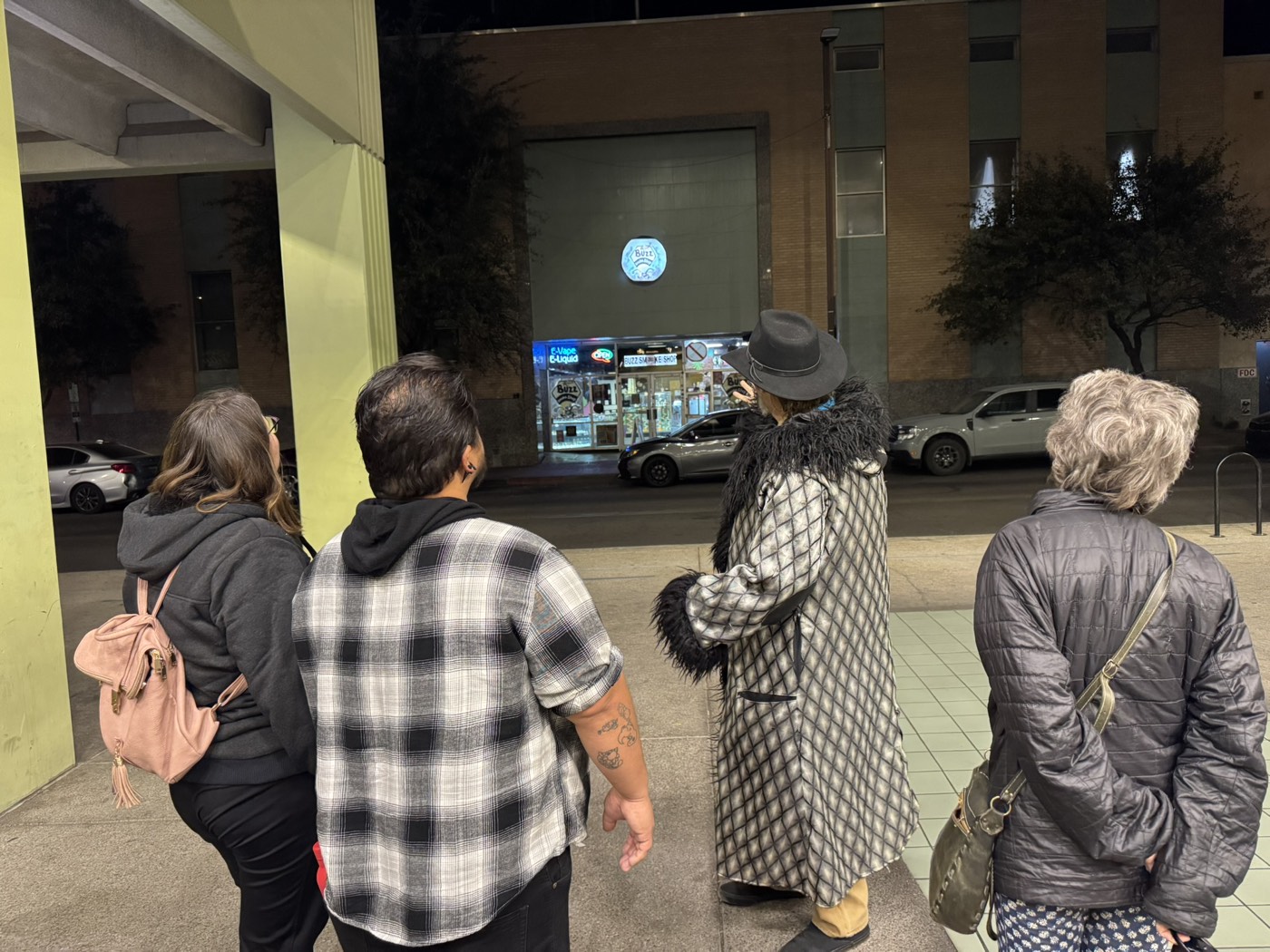
The Pioneer is a stop on our Downtown Tucson Haunted History Tour: 90 minutes and about a mile through eight stops in the heart of the Old Pueblo, meeting at Hotel Congress, 311 E Congress St, with nightly departures at 8 PM. Tickets are $29 for adults, $25 for students and $22 for children, and the tour holds a 4.7 of 5 rating across 25+ TripAdvisor reviews for this tour as of September 2026. This stop is told as a memorial, and the route is planned so it can be. Current departure times are in the booking calendar, and cancellation is straightforward: full refund when canceled 24 or more hours before the tour, no refund inside 24 hours.