The Devil in the White City: A Haunting History Tour is a three hour tour run by Chicago Hauntings, booking from $74.99 at our July 30, 2026 check. It covers the 1893 World's Columbian Exposition and the swindler who used the name H. H. Holmes, and takes its title from Erik Larson's 2003 bestseller. The listing names five stops: the Prairie Avenue Historic District, Jackson Park and its Japanese Garden, the Union Stock Yard Gate and the Museum of Science and Industry. Those sit miles apart across the South Side, and with a restroom on board, plan on riding rather than walking. The adult age band starts at 16 and it is not wheelchair accessible. It is for readers of the book who want the documented version.
| Detail | What the listing shows |
|---|---|
| From price | $74.99 per person (checked July 30, 2026) |
| Duration | 3 hours |
| Departures | No clock time is published on the listing. Confirm when you book. |
| Minimum age | 16, per the listing's own adult age band, which runs 16 to 100 |
| Accessibility | Not wheelchair accessible, per the listing. Stroller access is not stated. |
| On board | A restroom, per the listing. The listing does not name the vehicle. |
| Listed stops | Five: Prairie Avenue Historic District, Jackson Park's Japanese Garden, Jackson Park, Union Stockyard Gate, Museum of Science and Industry |
| Also named in the operator's description | Midway Plaisance Park and the site of the so-called Murder Castle. Neither appears in the itinerary stop list, so ask what those stops involve. |
| Cancellation | Not stated either way in our capture. Read the cancellation terms before you book. |
| Group size | Not stated on the listing. |
| Meeting point | Not stated in our capture. Confirm the address when you book. |
| Rating | 4.5 from 17 Viator reviews, a thin sample. Treat it as a weak signal either way. |
| Availability | Bookable at our July 30, 2026 check |
| Operator | Chicago Hauntings. We do not run this tour. |
What you will see
Prairie Avenue is a district, not an address: the 1800 and 1900 blocks of South Prairie, the 1800 block of South Indiana and 211 to 217 East Cullerton. After the Great Fire this was where Chicago's money lived, and the City's landmark record calls it "the city's most fashionable neighborhood," home to the Armour, Field, Kimball and Pullman families (Chicago Landmarks). Six blocks survive, not an intact street. Two things guides still promise here are gone: the bronze group George Pullman commissioned from Carl Rohl-Smith in 1893, showing the Fort Dearborn engagement, stood at the site only until 1931 and is not on public display there (Chicago Monuments Project), and the cottonwood called the Massacre Tree fell in a storm on May 16, 1894. The battle site is traditionally identified as 18th and Prairie rather than archaeologically proven, and the fort stood about two miles north.
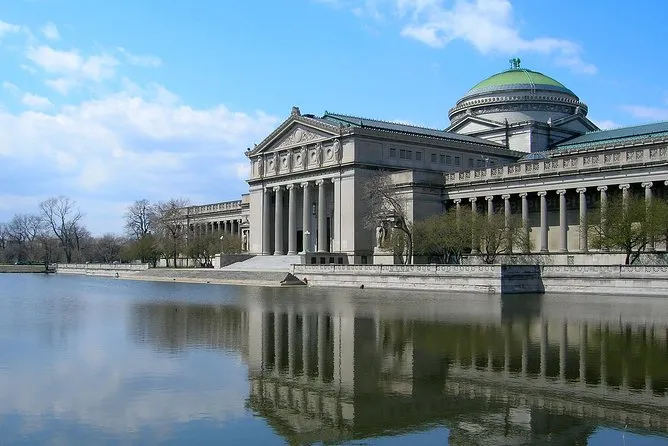
Jackson Park is the ground of the White City, and the White City is not there. The exposition ran from May 1 to October 30, 1893 across roughly 686 acres and drew close to 27.5 million admissions (National Park Service), but nearly all of it was temporary staff and plaster, down within a few years. The Museum of Science and Industry, the fifth listed stop, is the former Palace of Fine Arts and the major survivor, rebuilt in permanent materials in the late 1920s and 1930s. The gilded Statue of the Republic is not the fair's either: it is a 1918 replica at one third scale, 24 feet against the original's 65 (Chicago Park District). The Ferris Wheel stood on the Midway Plaisance, not the fairgrounds. The fair's one documented disaster is the Cold Storage Building fire of July 10, 1893: twelve firemen, eight of them Exposition employees, and three civilians died (National Fallen Firefighters Foundation).
The Japanese Garden sits on the Wooded Island, which Frederick Law Olmsted left at the center of the lagoons he dredged for the fair. It held the Ho-o-den pavilion in 1893, and the Osaka Garden holds part of that ground today (Chicago Architecture Center). The Union Stock Yard Gate is what is left of a livestock market that opened on December 25, 1865. Guides credit the limestone gate to Burnham and Root, but the 1972 National Register nomination hedges: authorship cannot "be established irrefutably," the firm "probably drew the plans for the stone gate," and the date is "around 1879" (NRHP nomination 72000451). The carved steer head "is said to be" Sherman, "supposedly" named for John B. Sherman. The gate fronted the market, not the killing floors. Twenty-one firefighters died at the yards in the fire of December 22, 1910 (Chicago Fire Department).
The Holmes material is where the popular story sits furthest from the record. Larson's book is a retelling, not documentation. Herman Webster Mudgett stood trial in Philadelphia on October 28, 1895 for murdering his business partner Benjamin Pitezel, was convicted of that one murder, and hanged on May 7, 1896 (Smithsonian Magazine). The killings that can be established were of people he knew: employees, lovers, a partner and that partner's children. Adam Selzer, working through the surviving newspaper, legal and property records, confirms nine. He confessed to 27, but people on that list were later found alive and others appear invented; the 200 figure still circulating traces to a 1940 pulp history. His Englewood building was not at the fair: it stood at 601 to 603 West 63rd Street, three miles west of the fairgrounds, shops below and rented rooms above. Nor did it burn down with his secrets inside: the August 1895 fire came while he was in custody, the upper floors were rebuilt, and the block stood until 1938. A post office is there now (CBS Chicago).
Who it suits
Three hours on one thread, and the thread is a fraud and murder case that got attached to a world's fair after the fact. At $74.99 this is the highest priced of Chicago Hauntings' four Chicago listings. The subject includes the killing of a business partner's children, which is not incidental color.
- Good if you have read the book and want to know what holds up.
- Skip it if you want a scare. What is documented here is grim, not spooky.
- Skip it if anyone in your party is under 16, per the adult age band.
- Skip it if you need step-free access. This listing is flagged not wheelchair accessible.
- Check what is still standing first: the Holmes building, most of the fair and the Prairie Avenue monument are gone.
How it compares
Chicago Hauntings runs four listings in our Chicago set, and this is the price outlier. The Chicago Hauntings Original Ghost Bus Tour is $59 for the same three hours, opens to age 8, and carries the operator's most reviews at 150 and the lowest rating in our Chicago set at 3.8. Prairie Avenue Haunted History Tour and Ghost Hunt is $40 for two hours twenty and takes one of this tour's five stops in more depth, from age 11 and wheelchair accessible. Lincoln Park Hauntings Ghost Investigation Tour is $40 for two hours fifteen, an equipment format, ages 18 up.
Three hours is joint longest in our fifteen-tour Chicago set, matched by three other listings, and $74.99 is third highest there, behind a $330 private tour and a $75.48 Segway ride. The 4.5 rating rests on 17 reviews, so weigh it lightly, though five other Chicago listings sit on thinner samples still. For the wider field see Chicago ghost tours compared and our list of the best haunted ghost tours in Chicago.
Questions people ask
How old do you have to be?
Sixteen, per the listing's adult age band, which runs 16 to 100. The same operator's bus tour opens to age 8 and its Prairie Avenue tour to age 11.
What does it cost and how long is it?
From $74.99 per person for three hours at our July 30, 2026 check. Prices move, so confirm the current rate on the booking page.
How many people did H. H. Holmes actually kill?
Far fewer than the tour trade suggests. He was convicted of one murder, that of Benjamin Pitezel, and hanged in 1896. Adam Selzer's record-based count is nine; the 27 figure is Holmes's own confession, which named people later found alive.
Do you visit the site of the so-called Murder Castle?
There is nothing to visit. The building stood three miles west of the fairgrounds and was demolished in 1938; a post office occupies the site. The operator's description names it, so ask what that stop involves.
Is any of the 1893 fair still standing?
Very little. The Museum of Science and Industry is the former Palace of Fine Arts and the major survivor, rebuilt in permanent materials in the late 1920s and 1930s. The Statue of the Republic is a 1918 replica.
Is it wheelchair accessible?
No. The listing is flagged not wheelchair accessible, and stroller access is not stated. There is a restroom on board, per the listing, though no vehicle is named.